

### Blog Post:
Garage storage shelving is now a cornerstone of effective home organization, enabling homeowners to reclaim garage space and keep everything from power tools to outdoor gear safe, visible, and easily accessible. As families search for ways to maximize their usable space, modern shelving and overhead storage have become essential, but the right approach is critical to avoid costly or frustrating mistakes.
Key Takeaways
- The garage storage shelving market is growing fast, driven by space-saving trends and the surge in DIY solutions.
- New innovations like modular, wall-mounted, and overhead systems offer high weight capacity and flexible installation, but challenges remain with cost and installation complexity.
- Most competitor guides ignore real installation costs, consumer spending patterns, and analysis of negative reviews—leaving key decision data missing for buyers.
- What Is Garage Storage Shelving and Why Optimize Your Garage?
- Step-by-Step Guide: How to Plan and Install Garage Storage Shelving
- Advanced Analysis & Common Pitfalls: What Most Homeowners Miss
- Conclusion
- Frequently Asked Questions
What Is Garage Storage Shelving and Why Optimize Your Garage?
Garage storage shelving consists of steel, composite, and heavy-duty plastic systems that let you store bulky or frequently-used items vertically. Overhead garage shelves and wall-mounted shelving are now popular options for clearing floor space and increasing safety around vehicles. According to recent market research, the global garage shelving market is projected to reach $2.15 billion by 2032, fueled by rising home improvement trends and the need to manage clutter. DIY demand is strong, but the growing complexity of options and installation requirements mean that planning is more important than ever.

Shelving systems come in three main types: freestanding (no drilling), wall-mounted (anchored to studs or masonry), and ceiling-mounted units (hung from joists for seasonal or less-used items). High-end models now integrate features from modular shelving systems for easy reconfiguration. As garage space is often limited, the right shelving choice not only increases usable area but may even protect belongings from water or pests. For those interested in whole-home storage makeovers, pairing garage shelving with a closet organizer system or mudroom built-in drives a truly organized lifestyle and property value boost.
Step-by-Step Guide: How to Plan and Install Garage Storage Shelving
Transforming your garage with smart shelving requires more than just buying the cheapest kit. Follow these steps for a frustration-free installation and optimal long-term use.
1. Assess Your Needs and Garage Layout
- Identify what you need to store: seasonal items, tools, sporting gear, bins, chemicals, etc.
- Choose between freestanding, wall-mounted, or ceiling-mounted systems based on your stored item’s weight and frequency of use.
- Consider space for vehicles, doors, and walking paths—leave at least 36 inches clear for drive-in access.
For odd-shaped corners or underused zones, review tips from the under stair storage guide.
2. Compare Material Types and Weight Ratings
- Steel units (powder-coated or galvanized) offer the highest weight capacity and are built for heavy-duty tasks—often lasting decades.
- Plastic shelving is lightweight, quick to assemble, affordable but prone to sagging under heavy loads or UV exposure.
- Composite or wood shelving delivers a warmer look, but needs periodic inspection for warping or mildew—best for light-duty or climate-controlled spaces.
- For adjustable and customizable solutions, check out ideas in the modular shelving system guide.
3. Estimate Your Budget and Time
- As of 2026, expect typical 4-tier metal shelving to cost more than plastic—steel justifies the premium with strength.
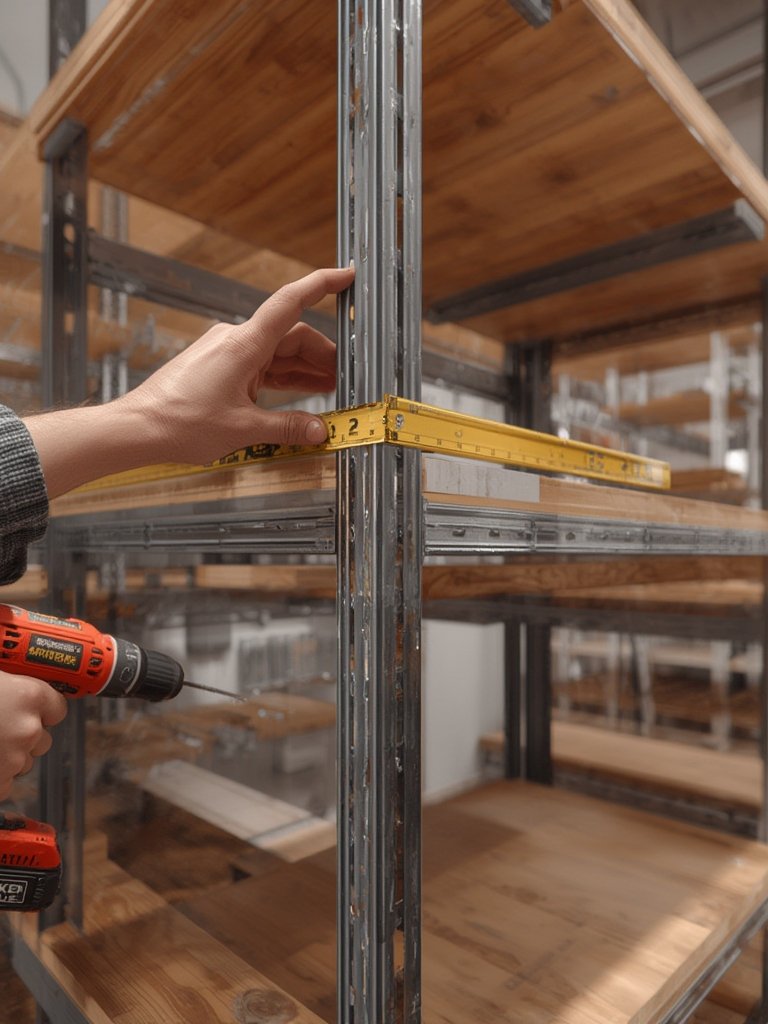
- DIY wall-mounted installs usually require only basic tools (stud finder, drill, level) and 2-4 hours, while ceiling-mounted systems need 4-8 hours, a helper, and proper joist anchoring. No drill or “no-install” overhead kits cut this time in half and lower professional costs but check weight capacity before trusting heavy bins.
- Always factor in future expansion—modular, track-based shelving lets you reconfigure as your needs change, making upfront investment go further. For seamless, built-in looks that hide clutter, consider inspiration from the concealed storage cabinet approach.
4. Prepare the Wall or Ceiling Safely
- Locate wall studs or ceiling joists using a quality stud finder—never trust drywall alone for heavy items.
- For concrete or masonry walls, use sleeve anchors and a hammer drill.
- If wiring or plumbing is present, proceed with extreme caution—an accidental puncture leads to costly repairs and safety hazards.
5. Install the Shelving
- Assemble freestanding units on a flat surface before moving into your garage.
- For wall-mounted shelves, pre-drill pilot holes and use lag bolts in studs for maximum support.
- Ceiling-mounted shelving: use appropriate hardware rated for at least 2x your expected load; get a helper to hold shelves level during attachment.
6. Load Items Carefully and Label
- Heaviest items go on lowest shelves or closest to the wall for stability.
- Store hazardous chemicals in ventilated, child-safe locations.
- Label bins and use clear totes for instant retrieval—adopt tips from the appliance garage kitchen guide for best labeling practices.
7. Maintain and Revisit Annually
- Check mounting hardware every year for looseness or rust.
- Rotate and review items to avoid forgotten “junk zones.”
Advanced Analysis & Common Pitfalls: What Most Homeowners Miss
Consumer research shows that installation mistakes or quality shortcuts lead to the most persistent problems with garage storage shelving. Be aware of the following pitfalls—and how to avoid them:
Common Pitfalls
- Incorrect mounting: Failing to anchor shelves into studs or joists (not drywall) causes shelf collapse and injury risk.
- Sagging or bowing: Overloading plastic or improperly mounted shelves. Always check product load limits before storing heavy goods—even metal shelves can bend if poorly braced.
- Moisture or pest intrusion: Low or poorly sealed units may collect water or attract pests, damaging stored items.
- Underestimating installation complexity: Ceiling-mounted systems may sound simple but require at least two people and precise measuring. Wall-mounted floating shelves give a clean look but must be expertly anchored (see hidden bracket floating shelf installation tips).
- Hidden costs: Screws, anchors, and additional supports often aren’t included in “budget kits.”
Material and Layout Comparison
| Type | Average Durability | Weight Capacity (Range) | Ease of Installation | Best For |
|---|---|---|---|---|
| Metal (Steel) | Very High | No official max, typically 600–2000 lbs/system* | Moderate (wall/ceiling-mount needs care) | Tools, auto parts, heavy bins |
| Freestanding (Steel/Composite) | High–Very High | Varies by frame; up to 400–800 lbs/unit* | Easy | Quick access, renters |
| Plastic/Composite | Low–Moderate | 100–250 lbs/unit* | Very Easy | Light goods, small tools |
| Ceiling-Mounted | Very High | Varies (not specified, must check specs)* | Challenging (2-person recommended) | Off-season, bulky, “long-term” storage |
*Based on published specs from leading brands—individual products may differ; manufacturers rarely disclose verified max loads in public sources. Always check your unit’s specs pre-purchase. Source.
Design and Tech Innovations That Matter
- Leading brands now offer “modular and customizable heavy-duty systems” allowing for easier upgrades and flexible layouts without full replacement (see research).
- Integrated inventory management—like QR-coded bins or app-based reminders—streamlines access and improves safety, especially in busy garages.
- For seamless, built-in solutions or multi-room projects (like linking office or reading nooks), compare options from our built-in home office storage guide or bookshelf styling tips.

Conclusion
Garage storage shelving has evolved—installing the right system will streamline your garage, protect your investments, and even add to your home’s overall value. Always start by measuring, comparing durability and design, and considering long-term flexibility. Don’t overlook essential pitfalls such as stud finding and installation complexity—shortcuts here often mean headaches down the road. Ready to reclaim your space? Choose tested, high-capacity shelving and revisit our internal resources for smart storage in every room. The market is growing, but with the right research and approach, your garage storage shelving solution will stand the test of time.
Ready to declutter? Start planning your garage storage upgrade today—measure, compare, and invest wisely for results you can trust.
Frequently Asked Questions
What weight can garage storage shelving really hold?
Weight limits depend on the design and mounting. Steel wall-mounted units often hold 600-2000 lbs per system, but always confirm the manufacturer’s rated load limits for each shelf—and never exceed them. Freestanding plastic units usually support 100-250 lbs, while ceiling-mounted shelves vary widely, so always check specs and err on the side of caution.
How much does it cost to install garage shelving in 2026?
No precise cost data is published for 2026. However, steel wall-mounted systems remain more expensive due to raw material costs, while modular or no-install systems are typically more affordable, especially for DIY projects. Always add in the cost of fasteners and any safety gear required.
Are ceiling-mounted garage shelves safe?
Yes, if installed into ceiling joists with manufacturer-recommended hardware and within rated weight limits. Always use two people for installation, and never hang shelves from drywall alone. For maximum safety, periodically check for loose lag bolts or signs of sagging.
What’s the best material for garage shelving?
Steel offers the highest durability and weight capacity for most garages. Plastic shelves are best for lighter loads but can warp over time. Composites and wood are suitable for controlled environments but require closer inspection for damage.
How can I make my garage look less cluttered?
Use a mix of wall-mounted and overhead shelving to maximize floor space. Label bins, use clear containers, and opt for modular units that allow for quick reconfiguring as needs change. For a built-in, seamless look, consider concealed storage ideas covered in our guides.