

Floating shelves living room setups are transforming how we decorate, organize, and maximize small or large living spaces. Whether it’s about decluttering entertainment walls or making a bold design statement, floating shelves offer versatile storage—and a fresh, uncluttered look. In this guide, you’ll learn market trends, expert tips, advanced pitfalls, and realistic costs to get floating shelves right the first time.
Key Takeaways
- The floating shelves market for living rooms is booming, with global demand projected to nearly double by 2033—driven by space-saving trends and minimalist design.
- Installation mistakes—like missed wall studs or improper mounting hardware—are the top reasons shelves fail or look misaligned.
- Choosing shelf material, finish, and proper bracket systems makes all the difference for both safety and style.
- What Makes Floating Shelves Work in Living Rooms?
- How to Install Floating Shelves in Your Living Room (Step-by-Step)
- Advanced Analysis & Common Pitfalls
- Conclusion
- FAQ
What Makes Floating Shelves Work in Living Rooms?
Floating shelves are wall-mounted storage solutions with hidden or minimal supports, offering a clean, open look that suits modern and traditional living rooms alike. As the demand for uncluttered surfaces and flexible storage rises, these shelves are quickly replacing bulky bookcases and dated wall units. The global floating shelves market—estimated at USD 1.5 billion in 2024—is forecasted to see robust growth, nearly doubling by 2033. Homeowners love them for maximizing vertical space, displaying art or family mementos, and even organizing electronics in a minimalist setup.
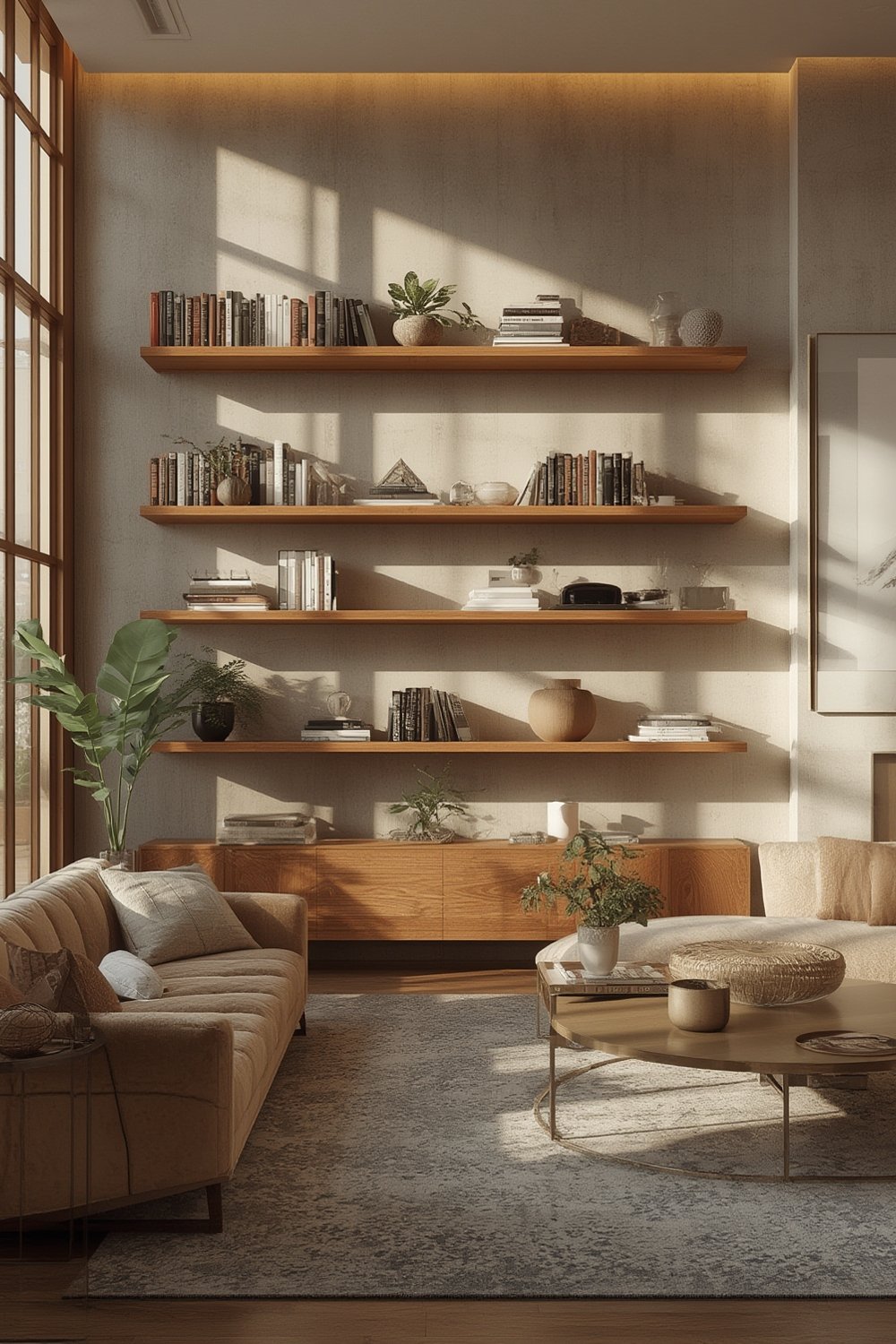
Minimal hardware means shelves seem to “float” without visible brackets, making them visually lighter and simpler to style than traditional shelves. This effect is especially helpful in apartments or homes where room layouts need to adapt over time. The push towards DIY home improvement, combined with post-pandemic habits for home organization, is putting floating shelves at the center of living room upgrades.
Besides functionality, floating shelves come in a range of finishes—from deep wood tones (the latest trend, overtaking whites and pale woods in 2026 according to industry reports) to sleek modern metals. This allows integration with nearly any style or color palette.
Compared to massive built-in wall units, floating shelves provide an economical upgrade with high visual impact. If you want more built-in inspiration, see our guide to built-in entertainment centers and how they differ from floating designs.
How to Install Floating Shelves in Your Living Room (Step-by-Step)
Installing floating shelves can be a realistic DIY project, but the quality of your prep determines your end result. Here’s a proven, actionable process for a flawless floating shelf install—especially above a couch or on an accent wall.
- Assess the wall: Use a stud finder to locate studs if possible—this is recommended for load-bearing shelves.
- Mark shelf placement: For most living rooms, floating shelves are typically installed 10 to 14 inches above a couch, with at least 6 inches between shelves for display flexibility.
- Choose proper anchors: For drywall alone, use toggle bolts or specialized drywall anchors. Masonry or plaster walls require masonry screws and anchors.
- Drill pilot holes: Follow the shelf manufacturer’s instructions. Avoid damaging wiring or plumbing by using a stud finder that detects wires and pipes.
- Install brackets or supports: If using hidden brackets, ensure they are level and tightly fitted. Double-check all fasteners for security.
- Mount the shelf: Slide the shelf onto the brackets and check for front-to-back wiggle or sag. Reinforce with additional anchors if necessary.
- Test weight capacity: Start with lighter objects. Never exceed manufacturer guidelines for weight limits (see more on safety in Section 3).
- Style and adjust: Place objects, stand back, and check from multiple angles. Adjust as needed before loading with heavier or breakable items.
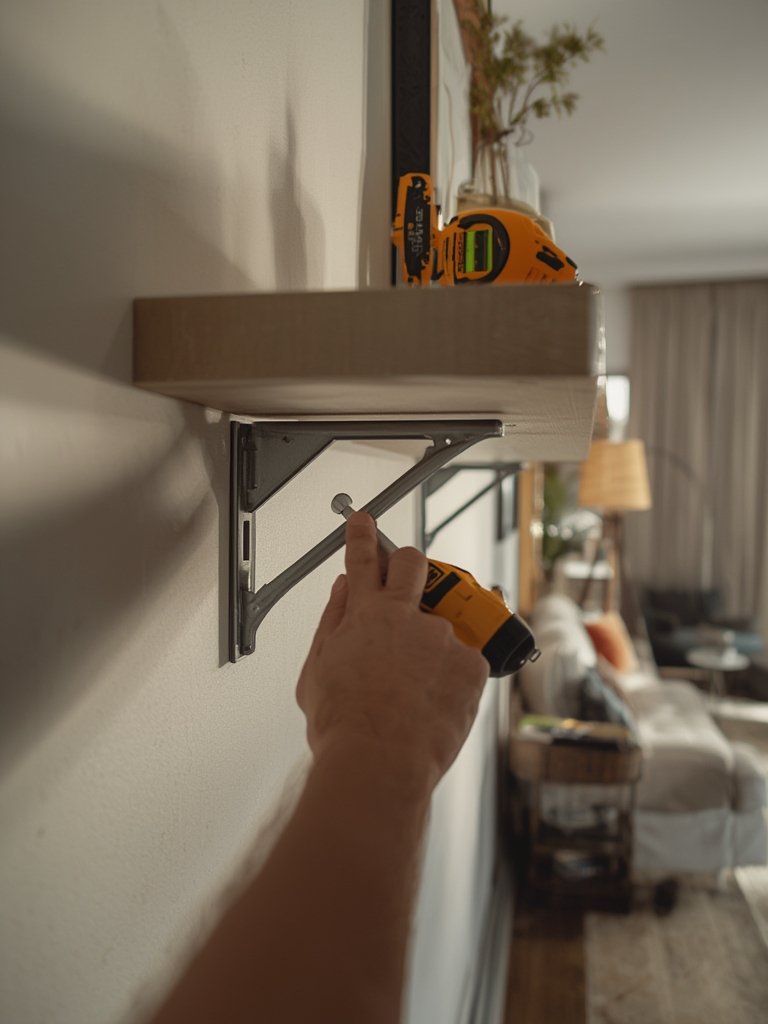
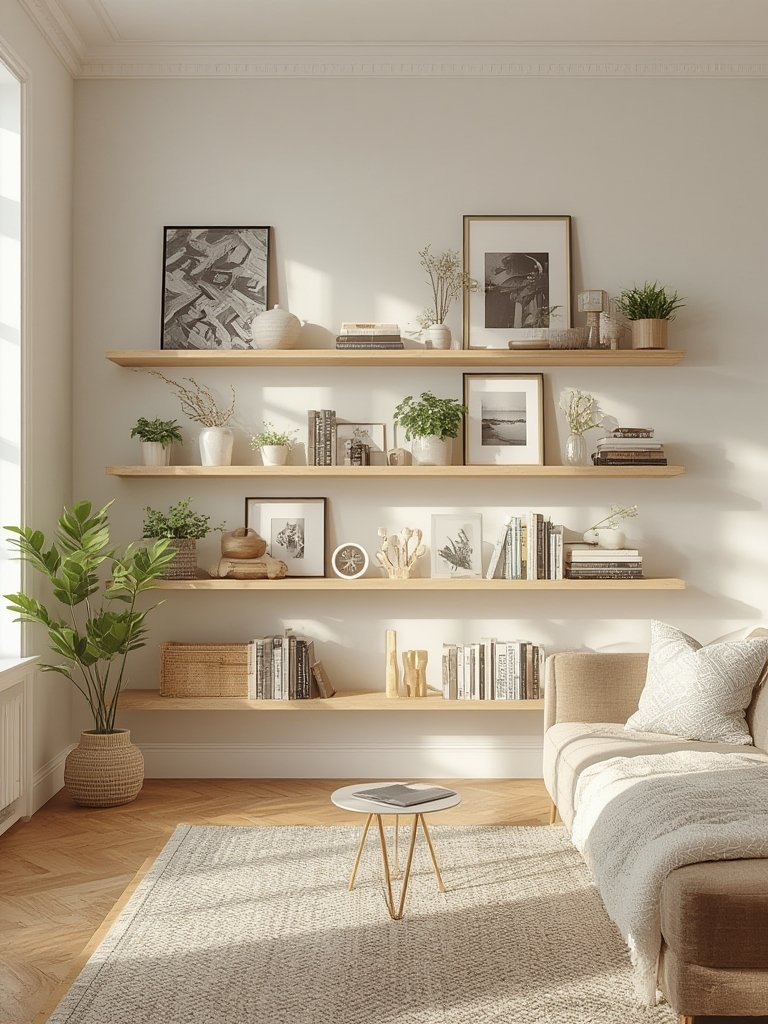
If planning a gallery wall, designers in 2026 recommend grouping shelves in odd-numbered clusters and varying their lengths for a more collected look. While metal shelves are trending for durability, warm wood tones (like walnut or cherry) are on the rise for cozier, less stark results. Learn more about mixing finishes and shelf depths in our curated bookshelf styling guide.
Want the benefits of shelving but need storage that blends in? Concealed storage is another modern approach—see examples in our concealed storage cabinet ideas.
For renters, consider floating shelf alternatives like modular shelving systems which can be wall-friendly without permanent holes.
Advanced Analysis & Common Pitfalls
Despite their popularity, floating shelves in living rooms come with real-world challenges. Current research data rarely mentions these, but experienced installers and designers commonly encounter the following issues:
| Problem | Why It Happens | How to Avoid |
|---|---|---|
| Mismatched anchor type | Using basic plastic anchors on drywall leads to shelf pullout | Use heavy-duty toggles or mount into studs |
| Sagging under heavy loads | Shelf is too wide for the support; low quality brackets; shelf material too thin | Use thicker shelves/brackets, or limit shelf length to under 36 inches for heavy objects |
| Visible bracket lines | Poor fit of the shelf onto the hidden bracket | Choose shelves with machined or custom-cut channels sized for the bracket |
| Wall damage when uninstalling | Drywall anchors or adhesives pull away significant material | Pilot holes and minimal use of anchors reduce damage |
| Sloppy shelf alignment | No use of a level, uneven wall surfaces | Double-check measurements and use a laser or bubble level |
Shelves above a couch must be extra secure to avoid accidents. While research data does not specify manufacturer weight limits, most floating shelf systems are rated for loads between 15 and 50 lbs per shelf, depending on bracket quality and wall type.
Learn more about invisible floating shelf brackets and correct anchoring techniques here.
Pricing for floating shelf installs varies locally, but as of early 2026, materials for a 36-inch wooden shelf range from $30 to $70, with professional installation typically costing $75 to $200 per shelf depending on wall type and complexity. Complex built-ins or gallery wall arrangements may require a custom approach.
Finally, shelf material matters: while metals are praised for strength in market reports such as Cognitive Market Research, modern deep wood finishes are trending for warmth and longevity. For even deeper storage, recessed wall shelves are a hidden storage alternative worth considering.
Conclusion
Choosing and installing floating shelves living room setups offers a beautiful path to mess-free, contemporary spaces. Success depends on picking the right material, nailing the install fundamentals, and anticipating practical issues like anchor security and shelf alignment. Ready to give your living room a lift? Start planning your floating shelf project today and enjoy more space, less clutter, and a look that’s on trend for 2026.
FAQ
How much weight can a typical floating shelf in a living room support?
Most standard floating shelves designed for living rooms can safely support between 15 and 50 lbs, depending on bracket design, anchor type, wall construction, and shelf width. Always follow manufacturer weight ratings and test with lighter objects first.
Can floating shelves be installed on plaster or masonry walls?
Yes, but you need specialized masonry anchors and a hammer drill. For plaster, use toggle bolts or expandable anchors—pre-drill slowly to avoid cracking the wall surface.
Should I hire a professional or can I install floating shelves myself?
If you’re comfortable with basic tools and wall prep, DIY is doable and saves money. Hire a professional for heavy shelves, tricky wall surfaces, or tightly grouped gallery walls.
What shelf material is best for a cozy but modern living room look?
Deep wood tones like walnut, oak, and cherry are trending for 2026. For more durability or minimalist effect, powder-coated steel shelves offer strength and easy cleaning.
What if I need to maximize storage in other rooms?
Consider custom built-ins or modular shelving. See our guides for closet organizers, under stair storage, and mudroom built-ins for space-saving solutions around the house.