

Built-in storage bench entryway solutions are changing the way homeowners keep foyers and mudrooms organized. If you want a streamlined look, smart shoe and coat storage, and a system that stands up to years of traffic, built-in benches are often the answer—when designed right.
Key Takeaways
- Built-in storage benches maximize entryway efficiency, but design missteps—like choosing units too shallow for adult shoes—impact usability and appearance.
- Material choice (solid wood, steel versus particle board) directly affects both longevity and overall yearly cost, making it worthwhile to invest up front if possible.
- Simple features—including front-access cubbies and sturdy weight support—are essential for real-life entryway organization, especially in high-traffic homes.
- What Is a Built-In Storage Bench Entryway and Why Choose One?
- How to Plan and Build a Built-In Storage Bench Entryway: Step-by-Step
- Advanced Analysis and Common Pitfalls
- Conclusion: Should You Build a Storage Bench Entryway?
- FAQ: Built-In Storage Bench Entryways
What Is a Built-In Storage Bench Entryway and Why Choose One?
A built-in storage bench entryway is a custom or semi-custom bench installation—usually with integrated cabinets, cubbies, hooks, or drawers—placed just inside the front door or mudroom. Unlike standalone benches, built-ins are tailored to your space and lifestyle, offering clutter containment, seating, and storage in one streamlined system. They are especially valuable where space is tight and seamless visual flow is important.
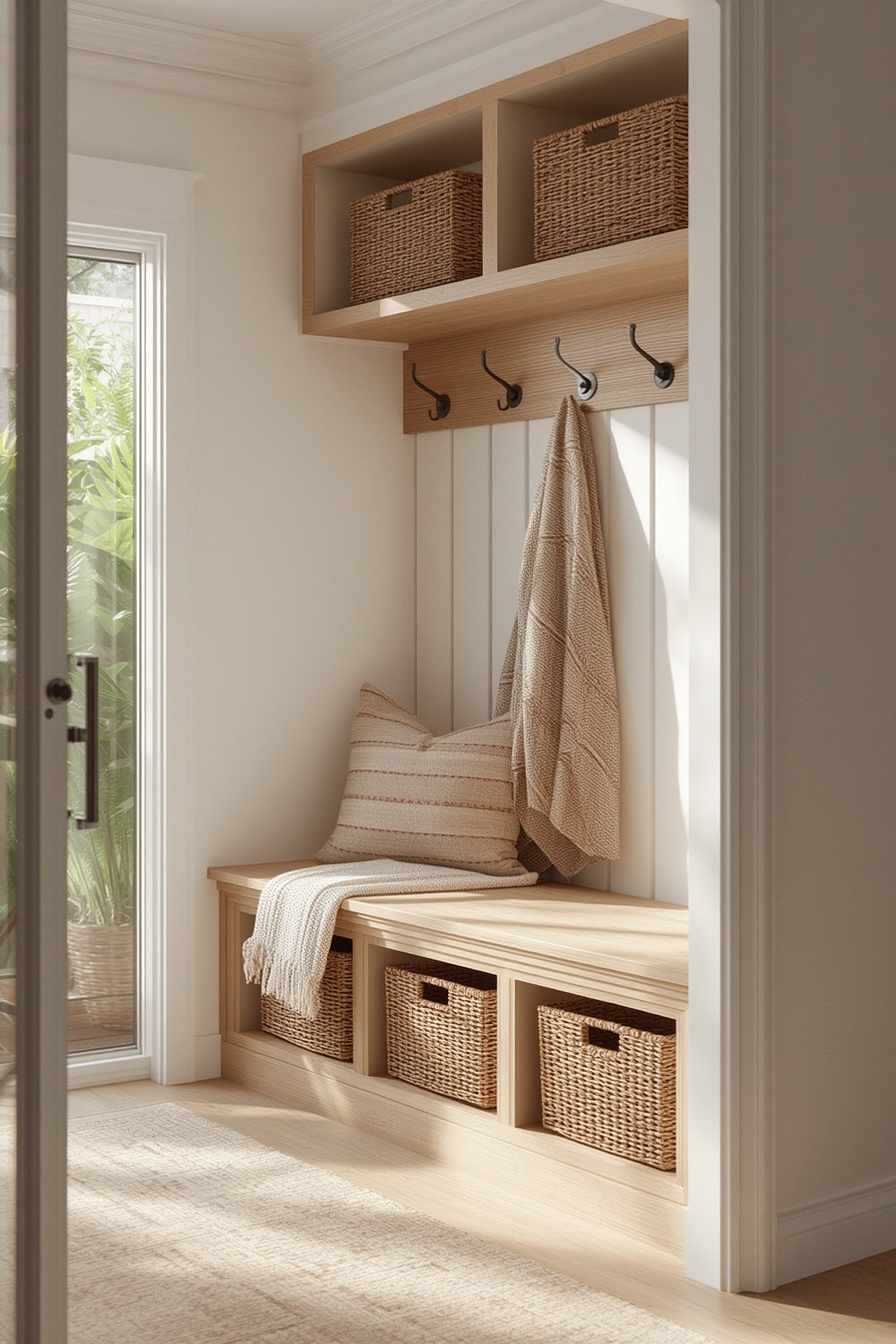
Homeowners choose built-ins for three main reasons: to maximize every inch of a small foyer, customize storage specifically for their needs (like boots, backpacks, pet leashes), and to boost the home’s resale appeal with permanent, functional upgrades. While outdoor storage benches are a big market globally [source], there’s a growing, if less documented, demand for built-in designs indoors.
Wondering how to keep the rest of your house organized after tackling your entry? Explore ideas for closet organizer systems or under stair storage built-ins for even more efficient storage.
How to Plan and Build a Built-In Storage Bench Entryway: Step-by-Step
Adding a built-in bench to your entryway isn’t just about good looks—it’s about function, fit, and longevity. Here’s how to get real-world results, not just Pinterest-worthy photos:
-
Assess Space and Traffic
Start by mapping the available entryway wall, factoring in door swings, walkways, and any heating vents or outlets. Use painter’s tape to outline the planned bench footprint. If your foyer is especially narrow, opt for a seat width no less than 13-14″ for sitting comfort, and 40–45″ wide to seat two adults. -
Choose Materials for Durability
For maximum lifespan, select solid hardwood (like white oak) or powder-coated steel. A 30-year lifespan is typical for these materials in high-traffic spots. Particle board is less expensive but often fails within 2–5 years. A good compromise: use hardwood for load-bearing surfaces and plywood for internal partitions. -
Plan Storage for Real-Life Needs
Drawers, lift-up seats, open cubbies, or front-access mesh shelves—each has strengths. Drawers and lift-up seats hide clutter but may need anti-tip safety features. Cubbies work best for families who like quick access. Add baskets, trays, or bins as needed. -
Secure to Wall and Floor for Safety
Always anchor the bench to wall studs. If including overhead cubbies or hooks, use toggle bolts for any area lacking a stud directly behind. For benches with drawers, ensure they can’t tip forward when open. Select hardware rated for high loads. -
Consider User Height and Reach
Install hooks at 60–65″ high for adults; if kids will use them, stagger extra hooks at 40–48″. For benches with shelves above, ensure they are reachable but not so low they block sitting. -
Finish and Style
Paint or stain for durability. Add a removable cushion for comfort—opt for leather or washable fabric.Looking for advanced bench plans or secret storage tips? See our window seat with storage and concealed storage cabinet guides for next-level inspiration.
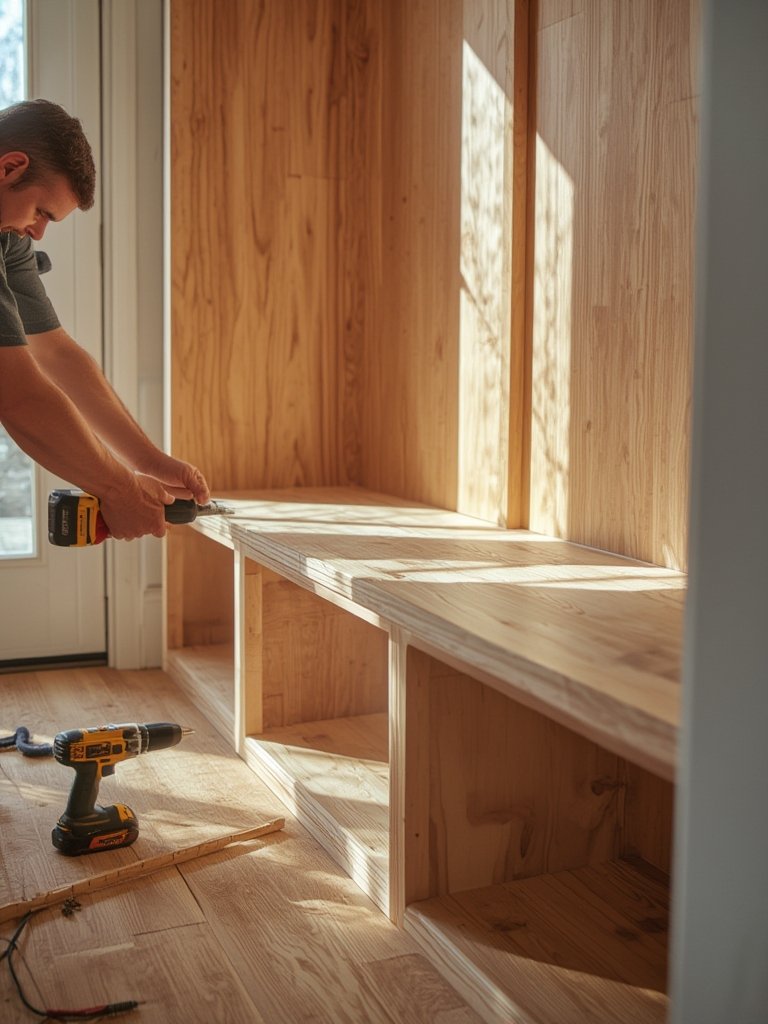
Need more flexibility? Check out modular shelving options for spaces that might change over time: modular shelving systems.
Advanced Analysis and Common Pitfalls
Designing an entryway storage bench isn’t without challenges. Misjudging the depth, skimping on materials, or missing key safety anchors leads to daily frustration or even structural failure. Here’s how to avoid the mistakes most homeowners regret:
| Pitfall | Description | Solution |
|---|---|---|
| Benches Too Shallow | Internal storage less than 12″ won’t hide adult shoes, causing tripping hazards and visual clutter. | Design cubbies with at least 12–14″ interior depth [source]. |
| Poor Material Choice | Particle board benches may warp or sag after a few rainy seasons, with higher yearly replacement costs. | Choose solid hardwood or powder-coated steel for benches that must support daily use. [source] |
| No Fixture Security | Failing to anchor benches, shelves, or hooks leads to dangerous tipping, especially with young kids or heavy winter coats. | Always secure all portions to wall studs with proper hardware. |
| Bench Too Low/High | A seat that’s too high or low feels awkward and discourages daily use. | Stick to 17-19″ seat height—18⅛” is a proven sweet spot. See examples here. |
| Neglecting Upgrades | No baskets, trays, or drip trays means mud and water can wreck the inside of the storage. | Add removable trays or metal mesh bottoms to cubbies for quick cleaning and drip-dry efficiency. [source] |
Cost is always a critical question. Pre-made, high-end steel or white oak benches range from $1,295 to $1,500, as shown in recent examples. Budget versions in particle board may cost under $300, but bear in mind their much shorter lifespan (3-5 years vs 30 years for premium), resulting in a higher annualized expense [source]. Labor and DIY materials vary based on your custom features and finishes.
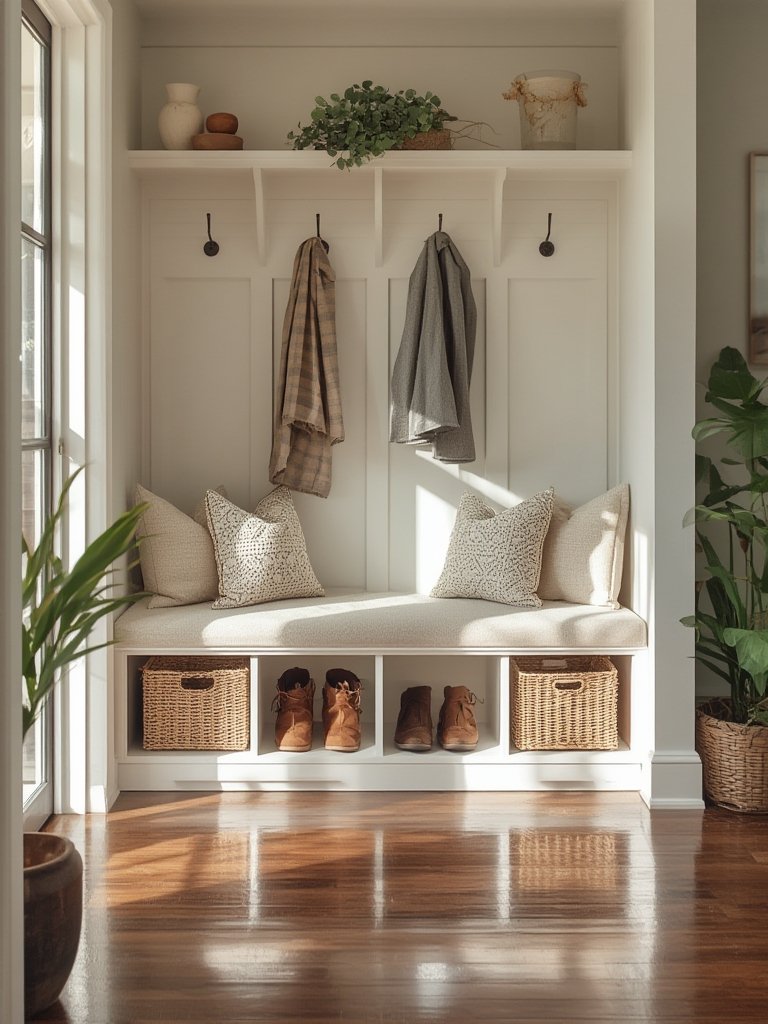
Looking for more hidden storage? Try a concealed storage cabinet or, for high-traffic drop zones, check out mudroom built-ins for additional planning advice.
Conclusion: Should You Build a Storage Bench Entryway?
When designed for your space, a built-in storage bench entryway can be a daily game-changer. Prioritizing durable materials, deep-enough cubbies for grown-up shoes, and solid wall anchoring pays off with a clutter-free, safer foyer. Skip “one size fits all” shortcuts—adapt ideas for your needs and focus on build quality. For more tricks to maximize every room, discover how to plan a built-in home office or smart closet built-in organizer. Ready to build more than a bench? Start designing your built-in storage bench entryway today for a lasting upgrade.
FAQ: Built-In Storage Bench Entryways
What is the ideal size for a built-in entryway bench?
A good rule is a seat height of 17–19 inches (18⅛” is common), a width that comfortably seats one or two (about 40–45″), and a minimum internal depth of 12–14″ for shoe storage.
What materials are best for built-in entry benches in high-traffic areas?
Solid hardwoods (like white oak) or powder-coated steel offer maximum durability and lifespan. Avoid particle board unless strictly on a short-term budget.
How do I prevent my storage bench from tipping over?
Secure the bench frame to wall studs using lag bolts or heavy-duty brackets. For benches with drawers or overhead shelves, anchoring is especially important to prevent accidental tipping.
Which storage configuration is most practical: cubbies, drawers, or lift-up seats?
Cubbies are best for quick access, drawers for a clutter-free look, and lift-up seats for extra hidden storage. For wet shoes or bags, mesh shelves or trays help with air flow and cleaning.
Are there affordable ways to customize a built-in storage bench entryway?
Yes. Use modular shelving above for flexible storage, repurpose baskets for cubbies, and add open hooks for an easy custom look without high labor costs.