

Best closet organizer systems can completely change how a bedroom, walk-in, or reach-in closet functions, but the wrong setup can waste space, look cheap, or fall apart under daily use. If you want a closet system that actually improves storage instead of creating new frustration, this guide walks you through the exact types to consider, the best options from your product list, and the mistakes most shoppers make before they buy.
Key Takeaways
- The best closet organizer systems balance hanging space, shelving, drawers, and adjustability.
- Wire systems are usually the easiest and most affordable, while wood systems look more custom and built-in.
- Closet width, ceiling height, and clothing mix matter more than brand hype.
- Poor measurements and unrealistic storage expectations are the two most common buying mistakes.
- The strongest picks in your sheet include ClosetMaid, Rubbermaid, and modular tower-based systems.
Table of Content:
What Are Closet Organizer Systems?
Closet organizer systems are storage setups designed to make better use of vertical and horizontal closet space through a mix of rods, shelves, drawers, shoe storage, and modular components. Unlike a basic single rod closet, a real organizer system helps separate short-hang clothes, long-hang items, shoes, accessories, and folded storage so the space works harder every day.
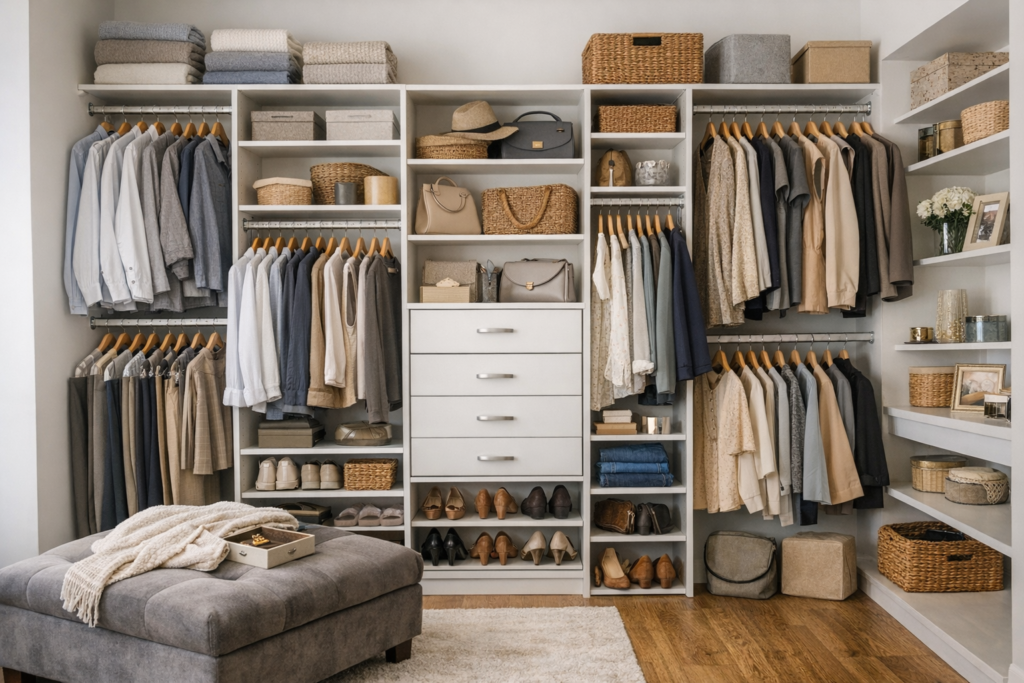
For most homeowners, the goal is not just “more shelves.” It is a system that fits the room, matches how you actually store clothes, and still leaves enough clearance to access everything easily. Some systems are wall-mounted and adjustable, while others use freestanding towers for a more furniture-like, built-in look.
Best Closet Organizer Systems From Your Sheet
- ClosetMaid SuiteSymphony Wood Closet Organizer Starter Kit with Tower: Best Closet organizer systems for a semi-custom built-in look. It gives you a central tower plus hanging sections, which makes it one of the strongest choices for primary bedroom closets.
- Rubbermaid Configurations Custom Closet Kit 4-8 Ft. Adjustable Metal Closet Organizer: Best Closet organizer systems for flexibility and easy adjustment. Great when you want to reconfigure shelves and rods later.
- ClosetMaid ShelfTrack Wire Closet Organizer System: Best Closet organizer systems for budget-conscious closet upgrades. It is simple, practical, and works well in reach-in closets.
- ClosetMaid Modular Storage Unit with 4 Drawers: Best for adding drawer storage where folded items, accessories, or kids’ clothes need better structure.
- ClosetMaid Modular Storage Shelf Unit with Angled Shoe Shelves: Best for shoe-heavy closets and entry-adjacent wardrobe storage.
Step-by-Step Guide: Choosing the Best Closet Organizer Systems
Here’s the smartest way to buy a closet system without ending up with dead space, sagging shelves, or a setup that never quite works.
💡 Pro Tip: Measure your closet twice and sketch your layout before you compare products. Most bad closet purchases start with guessing.
🔥 Hacks & Tricks: If your closet is narrow, use a tower plus one hanging section instead of trying to cram in too many rods. More pieces do not automatically mean more function. Humans adore overcomplication.
- Measure the closet width, depth, and height: Write down the total wall width, usable corner space, baseboard interference, outlet placement, and door swing. A system can look perfect online and still fail in real life because a shelf collides with trim or the drawers cannot fully open.
- Audit what you actually store: Count how many long-hang items, short-hang items, shoes, bags, and folded clothes you have. If you mostly hang clothes, prioritize double-hang rods. If you fold more, prioritize towers and drawers.
- Choose wire vs. wood: Wire systems like Rubbermaid and ShelfTrack are easier to install, lighter, and usually more affordable. Wood systems like SuiteSymphony and ClosetMaid modular towers look more polished and closer to custom built-ins.
- Decide how much adjustability you need: If the closet is shared, used by kids, or likely to change, adjustable systems win. If you want a cleaner finished look and already know your layout, a modular wood system often feels more premium.
- Add drawers only where they solve a real problem: Drawers are useful for undergarments, accessories, workout gear, and kids’ clothes. But too many drawers can reduce hanging space and make a small closet feel boxed in.
- Plan for shoes and accessories separately: Shoe storage works best when it is intentional, not shoved under hanging clothes. Angled shoe shelves or dedicated lower shelves are far more usable than random floor stacking.
- Check installation complexity before buying: Some systems are beginner-friendly. Others look “easy” until you realize they need accurate wall anchoring, leveling, trimming, or alignment across multiple sections.
Advanced Analysis & Common Pitfalls
The Biggest Difference Is Not Brand. It Is Layout Logic.
Many shoppers obsess over finish color and ignore the layout itself. A mediocre brand with the right mix of hanging, shelving, and drawers will outperform a premium-looking system that does not match your wardrobe.
Built-In Look vs. Real Flexibility
Wood systems usually win on appearance. Wire systems usually win on flexibility. If this is your forever layout, wood is often worth it. If you rent, move often, or expect your needs to change, adjustable wire systems are usually the smarter play.
Common Pain Points Shoppers Report
- Buying a system that is too wide for the actual usable wall
- Forgetting shelf depth and crowding hanging clothes
- Adding too many drawers in small closets
- Underestimating installation time
- Expecting one starter kit to fully finish a larger walk-in closet
Best Fit by Shopper Type
- Best overall built-in style: ClosetMaid SuiteSymphony
- Best flexible system: Rubbermaid Configurations
- Best budget upgrade: ClosetMaid ShelfTrack
- Best add-on drawer storage: ClosetMaid Modular 4-Drawer Unit
- Best for shoes: ClosetMaid Angled Shoe Shelf Unit
Conclusion
The best closet organizer systems do not just make a closet look cleaner. They make daily life easier, reduce wasted space, and help the room function like it was designed on purpose. For most people, the sweet spot is a system that mixes adjustability with enough visual polish to feel permanent. If you want the cleanest built-in look, start with SuiteSymphony or modular ClosetMaid towers. If you want flexibility and a simpler install, Rubbermaid and ShelfTrack are hard to beat.
Frequently Asked Questions
What is the best closet organizer system for a walk-in closet?
A tower-based system with drawers and multiple hanging sections is usually best for walk-ins. ClosetMaid SuiteSymphony is one of the strongest options from your sheet for that type of layout.
Are wire closet systems better than wood systems?
Wire systems are usually better for flexibility, price, and easy adjustment. Wood systems are better for appearance and a more built-in feel.
How deep should closet shelves be?
For most standard closets, shelves around 12 to 16 inches deep work well. Too deep, and items get lost. Too shallow, and the system becomes decorative nonsense.
Can I install a closet organizer system myself?
Yes, many systems are DIY-friendly, but careful measuring, leveling, and proper wall anchoring matter.
Is a modular closet system worth it?
Yes, especially if you want the ability to combine drawers, shoe shelves, and storage towers over time.
[…] guides on organizing adjustable shelving—many of the same principles carry over, as seen in this closet organizer comparison that also applies to shelf […]
[…] idea of maximizing storage throughout your home, you might also appreciate our in-depth guide to best closet organizer systems for every closet […]
[…] For other smart home storage ideas, see our guide to the best closet organizer systems for closets of every […]
[…] storage, but it also streamlines your routines—especially if you combine it with other clever closet organizer systems or living room shelving […]
[…] closet organization is your primary concern, check out this in-depth comparison of the best closet organizer systems for real-world layout […]