

### Blog Post:
Laundry room built-in cabinets instantly organize even the messiest home and can make laundry less of a chore. But every design choice has lasting consequences—get them right the first time with this proven, actionable guide drawn from real-world research and expert insight.
Key Takeaways
- Prioritize cabinet durability and correct clearances to avoid costly repairs or warranty issues.
- Integrate under-served innovations like pedestal drawers or steel guards for accessibility and function.
- Plan for humidity with the right plywood and moisture-resistant finishes for years of trouble-free use.
- What Are Laundry Room Built-In Cabinets and Why You Need Them
- How to Plan Laundry Room Built-In Cabinets (A Practical Step-by-Step Guide)
- Advanced Analysis & Common Pitfalls
- Conclusion
- Frequently Asked Questions
What Are Laundry Room Built-In Cabinets and Why You Need Them
Laundry room built-in cabinets are custom or semi-custom storage units fitted directly to your laundry walls—maximizing every inch of space around your washer, dryer, and related supplies. Built-ins make laundry zones more organized, offer hiding places for unsightly products, and let you add utility features like folding counters, utility shelves, and even bench seating in combo mudrooms.
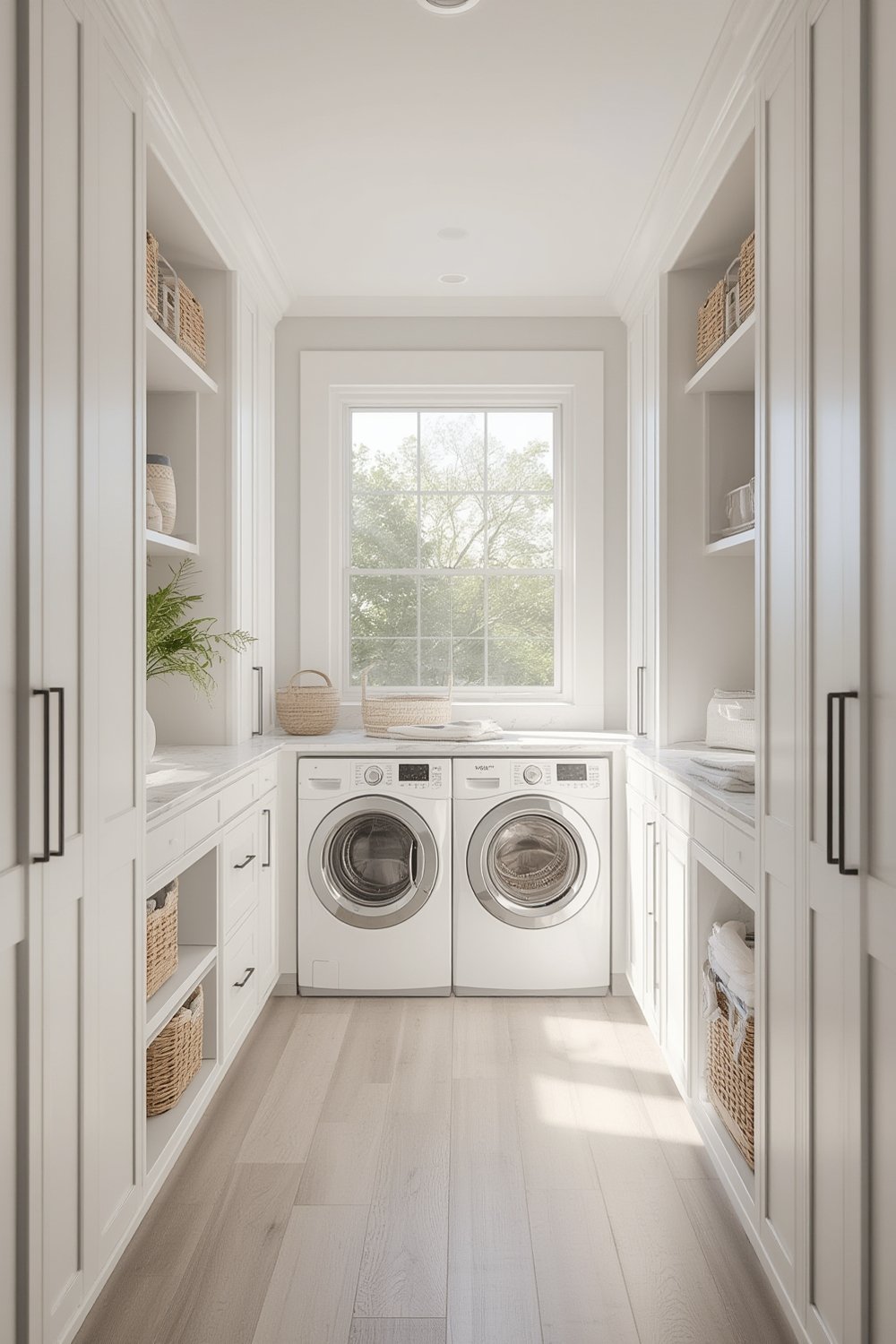
Why upgrade to built-ins? Unlike generic freestanding shelves or wall cabinets, built-ins can be adjusted for exact appliance spacing, ergonomic counter heights, and family-specific storage. If you have accessibility needs or want a mudroom combo, the flexibility of custom sizing makes all the difference.
Even though recent research doesn’t quantify the home value added, buyers consistently list “organized laundry room” as a must-have. Function, not just aesthetics, is what matters—especially in homes where the laundry also serves as a mudroom or utility passage.
If you’re interested in other smart storage solutions for different rooms, our built-in home office storage guide explores similar space-saving strategies.
How to Plan Laundry Room Built-In Cabinets (A Practical Step-by-Step Guide)
-
Assess your laundry habits and needs.
List all functions your laundry space serves. Do you need closed cabinets to hide detergents, a folding counter, utility shelving, or lockers for a mudroom entry? Factor in pet gear, cleaning tools, or bulk supplies. -
Map your appliances and rough zone layout.
Measure your washer and dryer (including door swings and hoses), sink, or drying racks. Mark minimum clearances: 26.4-inch cabinets with at least 0.4 to 0.8 inches on each side of appliances for access and ventilation (source). Leave proper space behind machines for plumbing and electrical connections. -
Choose your cabinet types and quality.
Pick from ready-to-assemble (RTA), semi-custom, or fully custom cabinets based on budget, layout, and storage needs. Plywood construction with moisture-resistant finishes performs best for the humid environment. Consider adding drawers over doors for easier reach and better accessibility—especially in tight laundry zones. -
Design for accessibility and ergonomics.
If you want wheelchair access or just less bending, add pedestal drawers under front-load washers and dryers. Lower floating counters offer space for folding while keeping the floor clear. stainless steel guards at cabinet bases protect from dings in high-traffic, accessible, or multi-use mudrooms (source). Adjustable shelving accommodates items from bulk detergent to extra linens. -
Plan durability and ventilation features.
Request anti-tip and anti-sag hardware, reinforced shelves, and vibration absorption to support heavy bottles and high-speed washers. Add ventilation grids above machines and ensure airflow at the back to prevent moisture build-up, which can lead to swelling or warping. -
Finalize finishes, lighting, and add-ons.
Choose moisture-sealing paints or laminates for easy cleaning. Add LED task lighting above work areas or inside cabinets. Consider utility hooks, pull-out ironing boards, or integrated baskets for high-function efficiency. -
Install (DIY or professional?) and organize.
While small utility shelving is a manageable DIY, full built-in cabinetry with appliance surrounds usually requires a pro—incorrect spacing or lack of ventilation may void machine warranties.
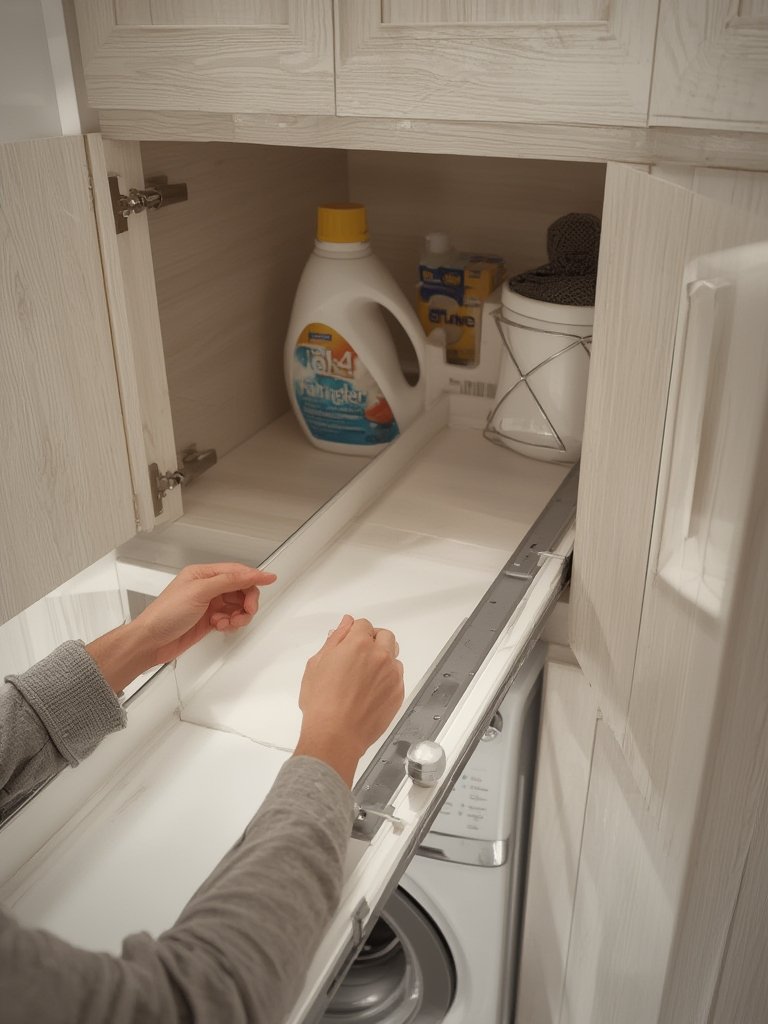
You can also borrow clever ideas from other built-in furniture, like using cabinet toe-kick drawers for rarely used items, as found in under stair storage built-in projects. These little hacks make any laundry zone work harder and look custom.
For even more customization tips, explore mudroom built-in strategies if your space doubles as a family entryway.
Advanced Analysis & Common Pitfalls
No built-in storage project is without risk. Avoid costly mistakes, poor usability, and future headaches by planning for these key pitfalls and challenges:
| Pitfall | Why It’s a Problem | How to Avoid |
|---|---|---|
| Cabinet Inaccessibility | Upper cabinets or counters placed too high make access tough for wheelchair users and children, or require excessive reaching/twisting—even post-renovation in some cases (source). | Keep primary shelves between 18–48 inches from the floor; use deep drawers or lower counters for accessibility. |
| Space Limitations Around Appliances | Insufficient side or rear gaps stop machines from fitting, complicate venting, and can invalidate appliance warranties. Airflow is a must (source). | Allow at least 0.4–0.8 inches on each side of appliances and 2–3 inches at the rear for hoses and power. |
| Durability Problems | Humidity may cause wood to swell or warp; poorly constructed drawers can shed pieces or tip dangerously under heavy loads. | Select plywood with moisture-resistant finishes; specify reinforced drawers and anti-tip brackets. |
| Innovation Gaps | Standard built-ins often skip features like under-washer pedestal storage, stainless steel kick guards, or vibration-absorbing cabinet framing, which improve usability and protection. | Ask for these modern touches up front; see more unique cabinetry ideas in our concealed storage cabinet guide. |
| No Cost Planning | Many sources lack concrete cost breakouts—leading to budgeting errors and surprise labor/material charges at install time (source). | Request quotes from cabinetmakers on every option: materials, labor, finish level, and upgrades. |
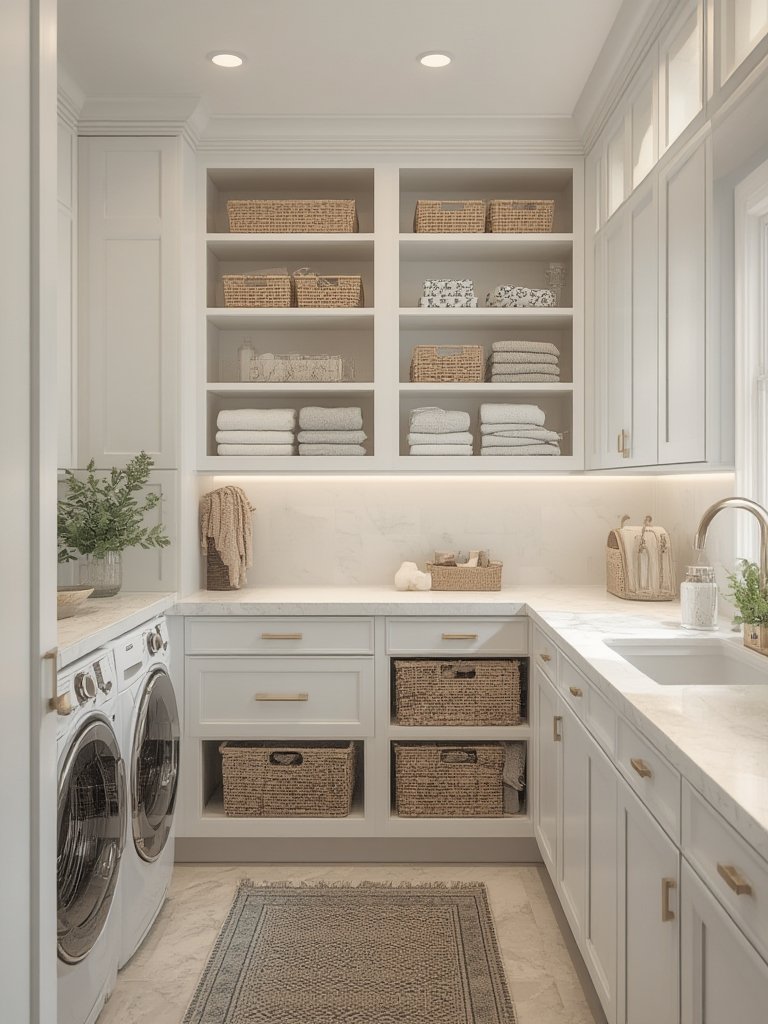
Many homeowners also under-plan vertical storage. Installing only basic wall cabinets above the washer/dryer wastes prime real estate—add floor-to-ceiling units and adjustable shelves for towels, baskets, and cleaning supplies. Adjustable modular systems offer flexibility as families grow or needs change. Check out ideas for maximizing every odd corner in our closet built-in organizer guide as well.
Conclusion
Done right, laundry room built-in cabinets will revolutionize your daily routine and boost your home’s function for years. Just remember—success comes from picking durable moisture-resistant materials, allowing proper appliance clearances, and incorporating accessibility and durability upgrades before install begins.
If you’re ready for a smarter laundry or mudroom, start gathering measurements, sketch a rough floor plan, and consult an experienced cabinetmaker. Want even more pro storage tips? Explore our other guides, including window seat with storage solutions for unused spaces.
Design your own laundry room built-in cabinets now and turn today’s chore zone into tomorrow’s organized hub. Download our full planning checklist—or connect with a designer—to get started.
Frequently Asked Questions
Are laundry room built-in cabinets worth the cost if there’s no proven home value increase?
While recent research lacks hard resale numbers, buyers often prefer homes with efficient, organized laundry areas. Built-in cabinets deliver lasting everyday functionality and reduce visible clutter—making them a smart lifestyle and potential resale investment.
What’s the best cabinet material for humid laundry or mudrooms?
Plywood with a moisture-resistant finish is consistently rated the most durable option for wet environments. Consider kiln-dried hardwood for premium appeal, or high-quality laminate/metal if budget or rough use is a concern. Learn more.
How can I prevent warping, sagging, or odor issues in laundry cabinets?
Use moisture-resistant or sealed cabinets (never basic MDF), provide ventilation grids above appliances, and avoid crowding machines. Install anti-tip brackets and reinforce shelves to handle heavy loads safely.
What are some innovative features to add to my laundry built-ins?
Consider pedestal storage drawers under front-load machines, stainless steel guards on base cabinets, tilt-out hampers, deep rollout trays, and soft-close mechanisms. Add under-cabinet lighting or hide-away folding counters for a more functional space.
Do laundry room built-ins require professional installation?
Small utility shelves or RTA cabinets may be DIY-friendly, but built-ins with appliance surrounds, special cutouts, and plumbing/electrical requirements usually require a pro. Incorrect installation can cause maintenance problems or void appliance warranties.