

### Blog Post:
Built-in bench with storage dining room solutions are transforming how homeowners maximize dining spaces, combining seating, storage, and seamless design. If you’re planning a dining nook upgrade, or want to avoid the common pitfalls of DIY banquette installation, this practical guide breaks down every essential detail—costs, materials, key measurements, and realistic advice from real homes.
Key Takeaways
- Expect $650–$1,300 for a built-in bench with storage dining room project (DIY vs. professional), with costs heavily impacted by wood type and custom features.
- Precise measuring, secure wall/floor anchoring, and selecting the right materials are crucial for comfort, safety, and long-term durability.
- Most tutorials ignore true weight limits, storage volume metrics, and region-specific costs—our guide reveals overlooked details for smarter planning.
- What Is a Built-In Bench With Storage for Dining Rooms?
- How to Build a Built-In Dining Bench With Storage: Step-by-Step
- Advanced Analysis & Common Pitfalls
- Conclusion
- FAQ
What Is a Built-In Bench With Storage for Dining Rooms?
A built-in bench with storage for dining rooms is a custom or semi-custom seating solution, often installed against a wall or in a corner, that incorporates usable storage under the seat. Unlike standalone benches or chairs, these benches are anchored for stability, sized to fit your table, and tailored to your room’s layout. Most owners want them for cramped dining nooks, to add hidden storage for table linens, kitchen gear, or bulky items that don’t fit elsewhere.
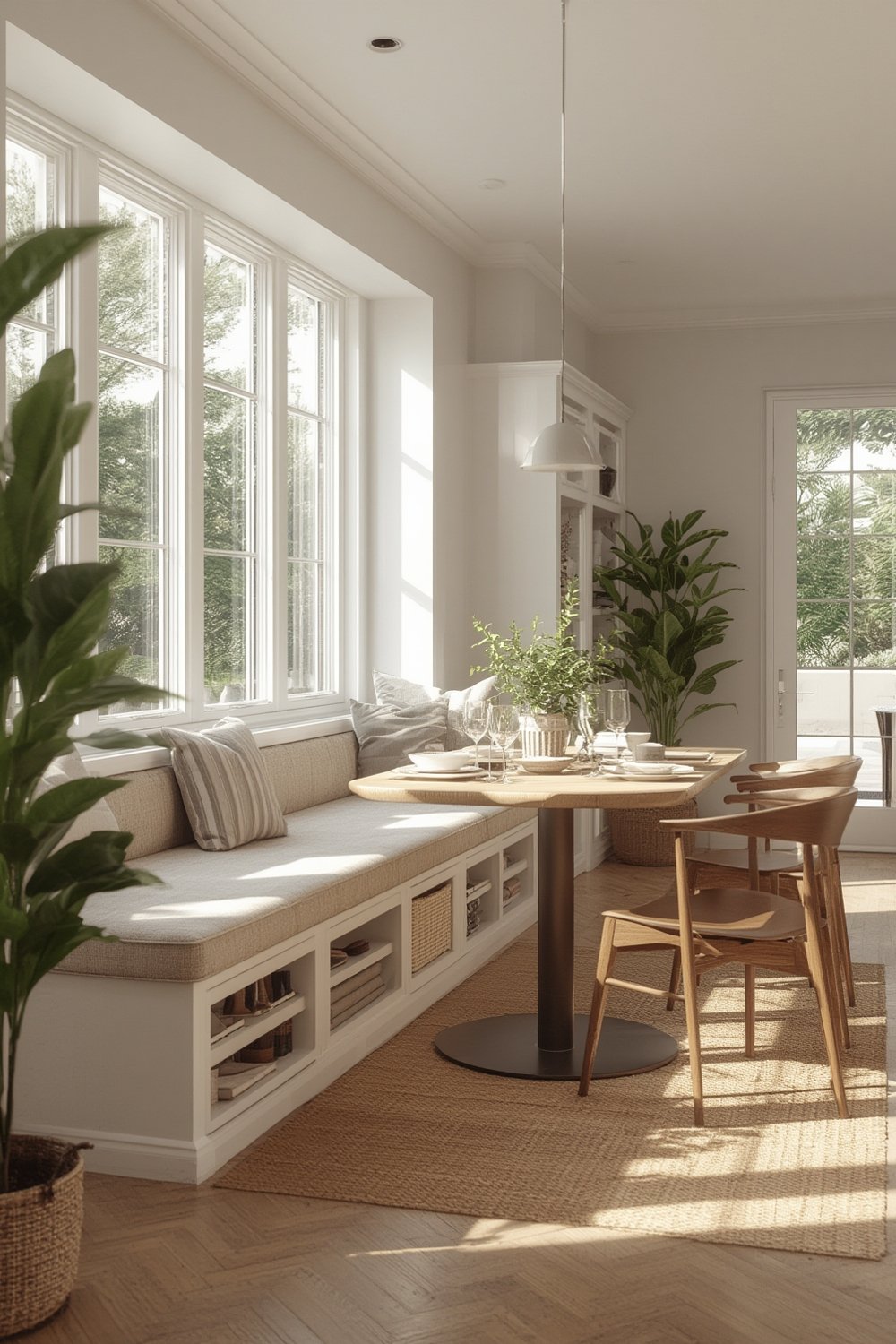
Project costs for a built-in bench with storage dining room build typically range from $650 in materials (DIY, standard pine, MDF, plywood) to $1,300 with professional labor or premium touches like oak, shiplap, or custom upholstery.[Source] Beyond the price, the real benefit is making every inch count—converting dead space along a wall or corner into dual-purpose seating and storage that feels fully integrated. Well-designed benches can create a cozy breakfast nook, ease traffic flow, and boost your home’s value, all while solving clutter problems.
How to Build a Built-In Dining Bench With Storage: Step-by-Step
Here’s a practical process for tackling a built-in bench with storage dining room project, from planning to paint.
- Layout & Sizing: Measure your space with the tabletop and windows in place. Standard seat height is about 17 inches, seat depth 18-19 inches, and lengths vary (e.g., 62″ long, 38.5″ for L-shape corner).[Source] Leave room for comfortable table clearance and legs.
- Materials & Tools:
- Plywood or MDF (⅝” or thicker) for seat, back, and sides.
- 2x4s for framing and structural support.
- Pine or oak boards for trim or exposed details.
- Shiplap for style (optional).
- Foam and fabric if adding an upholstered seat.
- Metal hinges for flip-up (hinged) storage.
- Standard fasteners, construction adhesive, wood glue.
- Frame It Out: Build the base frame with 2x4s, ensuring level, square support. Anchor the bench to wall studs and floor for stability. Space framing so the seat will not sag under the weight of adults plus any stored items.
- Add Storage Compartments: Typical approach is a simple open box under the seat, divided as needed. For large L-shaped benches, separate the compartment under each bench leg for easier access and support.
- Install Seat Lids: Use solid metal hinges for flip-up seats or opt for removable top panels. Make sure the seat is easy to lift and has no pinch points.
- Finish Details: Add front and side panels (plywood, MDF, or shiplap), trimmed with pine or oak boards. Caulk, sand, and finish with paint or wood stain. If upholstering, cut high-density foam to seat size, wrap with fabric and staple to a detachable seat lid.
- Final Fit & Safety: Check for wobble, sharp edges, or loose fasteners. If planning for kids or heavy adults, reinforce bench top with extra bracing.
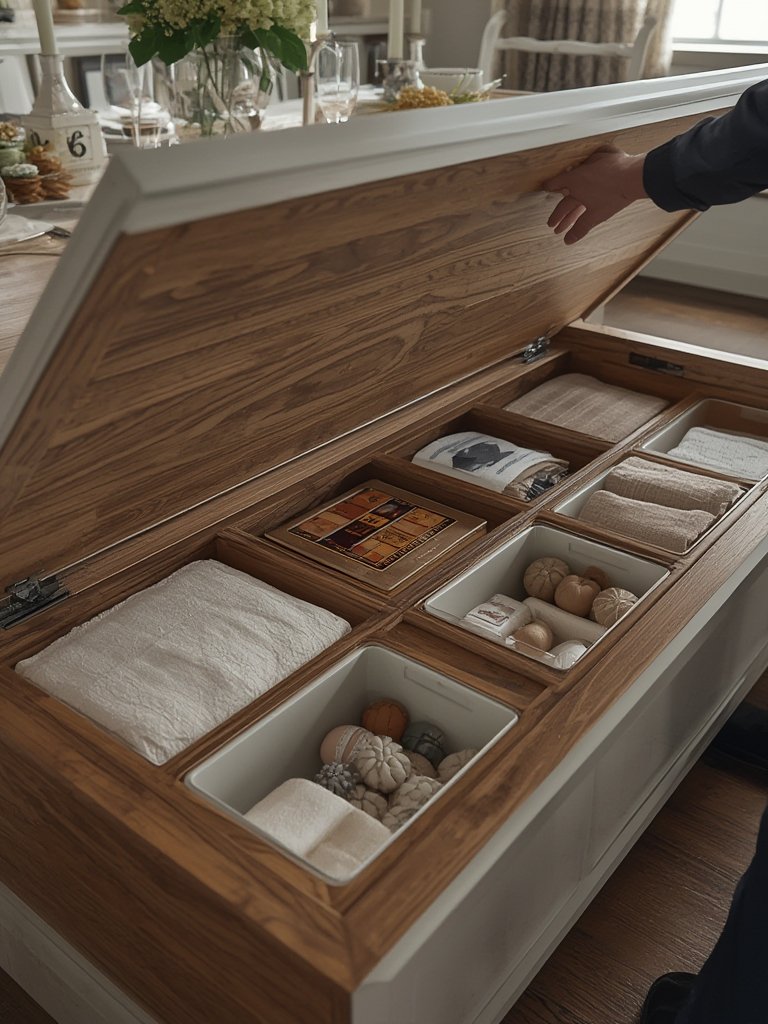
If you need other clever storage inspiration for your dining or adjacent rooms, learn how a closet organizer system, window seat with storage, or even under stair built-in can make your entire home less cluttered.
Advanced Analysis & Common Pitfalls
Most high-traffic articles gloss over critical reality checks. Here are problems and design gaps many homeowners encounter—plus how to sidestep them.
| Issue | Why It Matters | How to Avoid |
|---|---|---|
| Imprecise Measurements | Bench doesn’t fit table or window; can block pathways; seat height feels wrong. | Always mock up with painter’s tape or cardboard. Double-check table and chair clearances. Plan for 17″ seat height and ~18.75″ depth.[Source] |
| Not Anchoring Securely | Bench may tip, shift, or squeak under weight. | Bolt framing directly to wall studs and use sufficient floor anchors. Avoid wall-only or floor-only installations. |
| Underbuilt Framing | Bench top sags, storage items break loose, risk of injury with several adults seated. | Use 2x4s spaced every 16–18″. Don’t rely on thin MDF or plastics for structure. Overbuild, if unsure. |
| No True Weight Rating | Most guides skip stating how much weight the bench holds. This risks breakage, especially with storage below. | Aim for a design supporting at least 300 pounds per 4-foot span. Add more supports for longer benches. When in doubt, reinforce. |
| Omitted Storage Metrics | Without knowing storage volume, you may not gain as much usable space as expected. | Calculate the internal box (L x W x H, minus lid/frame thickness). For example: a 60″ x 16″ x 12″ box = ~6.7 cu ft of storage. |
| Premium Material Surprises | Switching from pine to oak can double your lumber bill. | Choose visible oak for trim only, use plywood for hidden strength, and compare local lumber prices before starting.[Source] |
| Ventilation/Odor Traps | Food spills or damp items inside storage can cause mildew. | Seal wood surfaces, leave a finger gap at lid edge for airflow, and never store damp objects inside. |
| Child Safety & Accessibility Overlooked | Lids without soft-close hinges can slam and injure fingers; deep storage is hard to reach for kids. | Opt for soft-close hinges or safety stays. Divide large seat boxes into smaller bays for easy access. |
The lack of hard data on regional costs or weight specs is a real problem. Even custom kitchen bench vendors, like those on MyCornerBench, don’t publish these. Be ready for price and labor surprises, especially if you live on the coasts, opt for luxury woods, or hire out the build.
Looking for alternative built-in options with published specs? Explore entryway built-in storage benches or a built-in cabinet with doors for the rest of your home.
Conclusion
Adding a built-in bench with storage dining room solution can dramatically enhance both function and style—but it’s essential to plan for the real-world challenges of accurate measuring, robust framing, and safe, accessible storage. Skip the shortcuts, keep material choices practical, and measure everything twice for a standout result. If you’re ready to make the most of your dining space, now’s the time to map out your own built-in project, and don’t hesitate to reference other guides like built-in entertainment centers or mudroom built-ins for further inspiration. Start your project today and reclaim valuable space with a built-in bench with storage dining room upgrade!
FAQ
How much does a built-in bench with storage for a dining room cost in 2024?
DIY material costs average $650 for an L-shaped plywood and pine build. Hiring a contractor raises that to $1,300 or more, especially if you add custom upholstery or premium hardwoods. Regional variation and inflation could increase prices further—always price out materials locally. [Source]
What are the standard dimensions for comfort and usability?
Most dining bench seats are 17 inches high, 18 to 19 inches deep, and lengths vary by space (e.g., 62 inches along a wall, 38.5 inches for a corner return). Never skip mocking up the dimensions before you build to ensure a comfortable fit! [Source]
What kind of wood and hardware should I use for best results?
Plywood or MDF for structure, oak or pine boards for visible trim, and sturdy metal hinges for the seat lid. Opt for high-density foam for upholstery comfort. Home centers can pre-cut plywood to save time if you lack a saw. [Source]
How much extra storage will I really gain compared to a standalone bench?
Each custom built-in can convert about 6–10 cubic feet of dead space into usable storage, depending on bench size. Exact metrics are often omitted, but the storage is typically deeper and longer than most ready-made ottomans or benches. When space is tight, every inch counts!
What style or design trends lead for built-in benches with storage through 2026?
Current favorites are cozy L-shaped corner setups, shiplap paneling, integrated hinged storage, and plush upholstered seats. While expert projections for 2026 vary, functional, low-profile designs that maximize every bit of nook space are the safest bet. [Source]
—